What is Kakadu plum?
Written by WIGNA EditorialUpdated 1 min read
In short
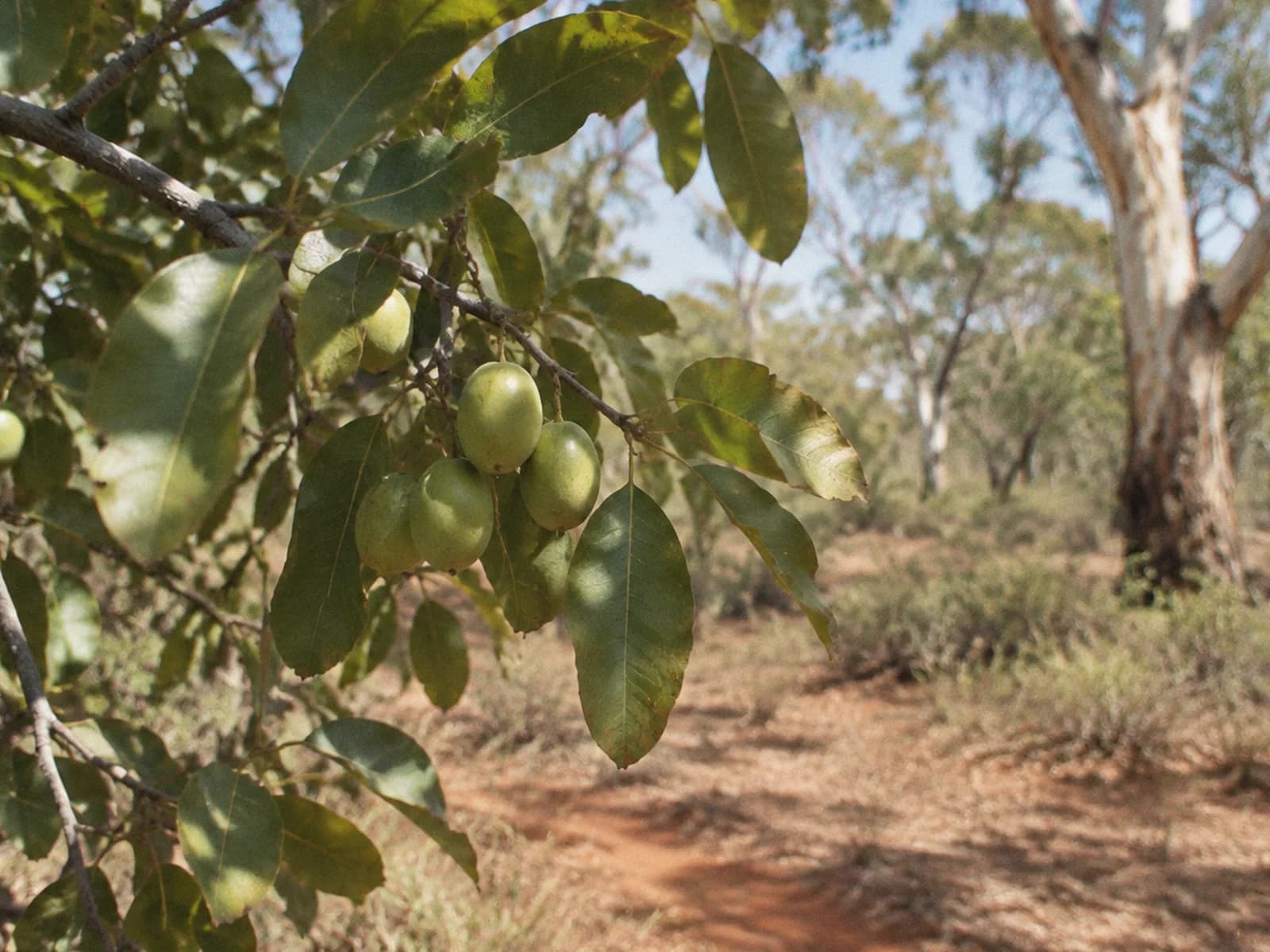
Kakadu plum (Terminalia ferdinandiana) is a native fruit of the savanna woodlands of northern Australia. Most of it is wild-harvested by Indigenous communities, and vitamin C makes up 3.5–5.9% of the fruit's weight, far more than the roughly 0.05% in citrus. The amount varies a lot between fruits and regions.
- Terminalia ferdinandiana grows wild from the Kimberley to Cape York
- Most fruit is hand-picked from wild trees by Indigenous communities
- Vitamin C is 3.5–5.9% of fruit weight, against about 0.05% in citrus
- Content varies widely from fruit to fruit, so check the vitamin C figure on the label
Where does Kakadu plum grow?
In the eucalypt savanna woodlands of northern Australia, from the Kimberley in Western Australia through the Top End of the Northern Territory to Cape York in Queensland.
Who harvests it?
Mostly Indigenous communities, who hand-pick fruit from wild trees on their own land. Aboriginal people have eaten the fruit for thousands of years, and it goes by different names across regions; the Bardi people of the Kimberley call it 'Gubinge'.
How much vitamin C does it contain?
Vitamin C makes up 3.5–5.9% of the fruit's weight, far more than the roughly 0.05% in citrus. Studies measure it in different ways:
| Study | Sample | Vitamin C |
|---|---|---|
| Williams et al., 2016 | Composite of many fruits | 16,366–19,183mg per 100g dry weight |
| Williams et al., 2016 | Individual fruits | 85–25,667mg per 100g dry weight |
| Bobasa et al., 2024 | Wild fruit from the Kimberley, WA | 25.2–131.5mg per g dry weight |
Why does it vary so much?
Kakadu plum is wild-harvested rather than farmed, so composition changes with the tree, the fruit and the region. The 2024 researchers linked the higher vitamin C in Western Australian fruit to longer sunshine hours, dry soils and lower rainfall.
What should I check on a product?
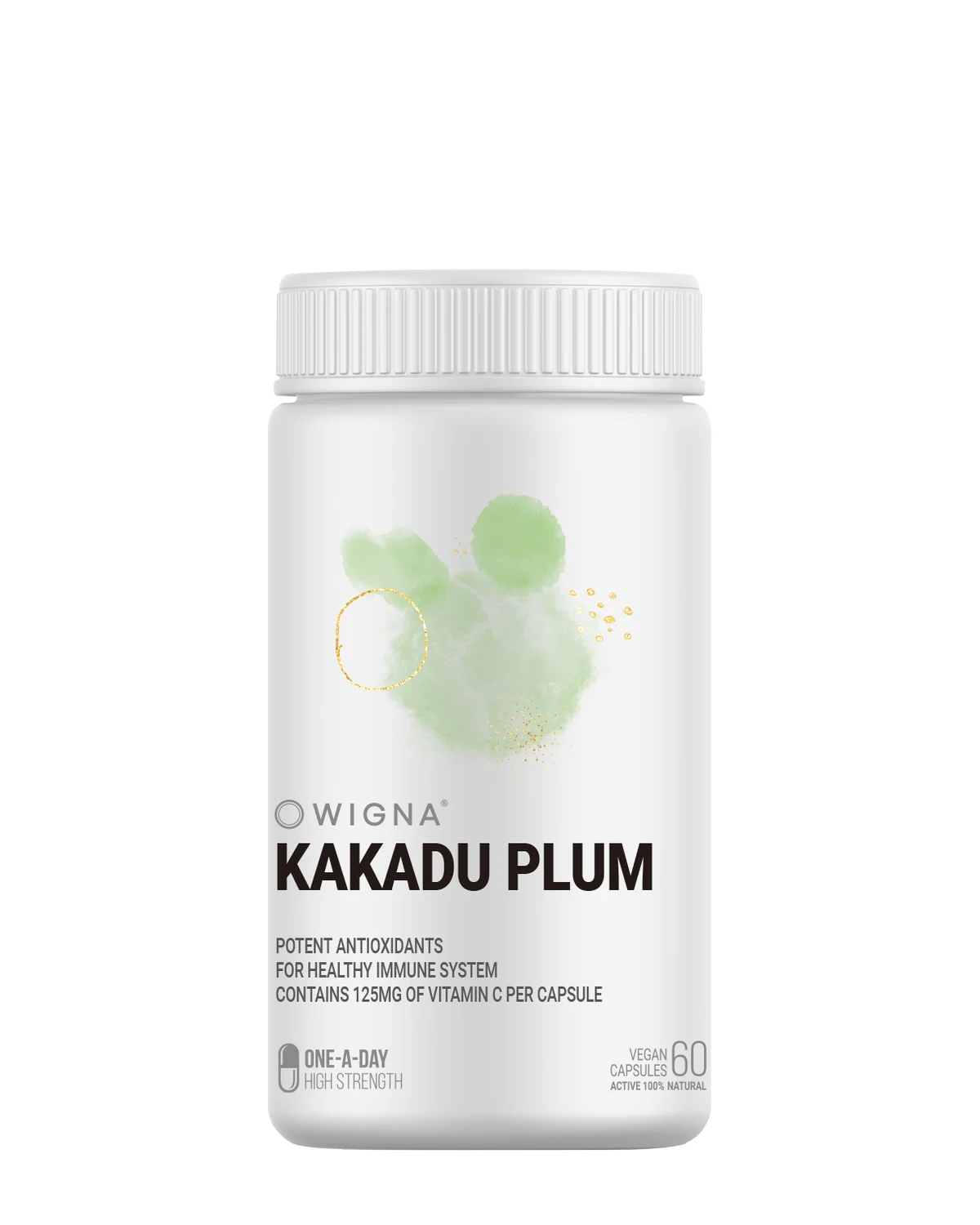
Look past 'contains Kakadu plum' to whether the label states both the amount of powder and the vitamin C content. WIGNA Kakadu Plum lists 500mg of wild-harvested Kakadu plum powder and 125mg of vitamin C from the fruit per capsule.
Products in this article
FAQ
Where does Kakadu plum grow?
In the eucalypt savanna woodlands of northern Australia, from the Kimberley in Western Australia across the Top End of the Northern Territory to Cape York in Queensland. Names differ by region; in the Kimberley it is also called 'Gubinge'.
How much vitamin C does it contain?
Vitamin C is reported at 3.5–5.9% of the fruit's weight. A 2016 study measured 16,366–19,183mg per 100g dry weight in composite samples of many fruits.
Why does vitamin C differ between products?
It is a wild fruit, so content varies with the tree and the region. In the same 2016 study, individual fruits ranged from 85mg to 25,667mg per 100g dry weight, and a 2024 study found Western Australian fruit higher than Northern Territory fruit. That is why the vitamin C figure on the label is the reliable number to compare.
How much is in WIGNA Kakadu Plum?
According to the label, each capsule holds 500mg of wild-harvested Kakadu plum powder, providing 125mg of vitamin C from the fruit.